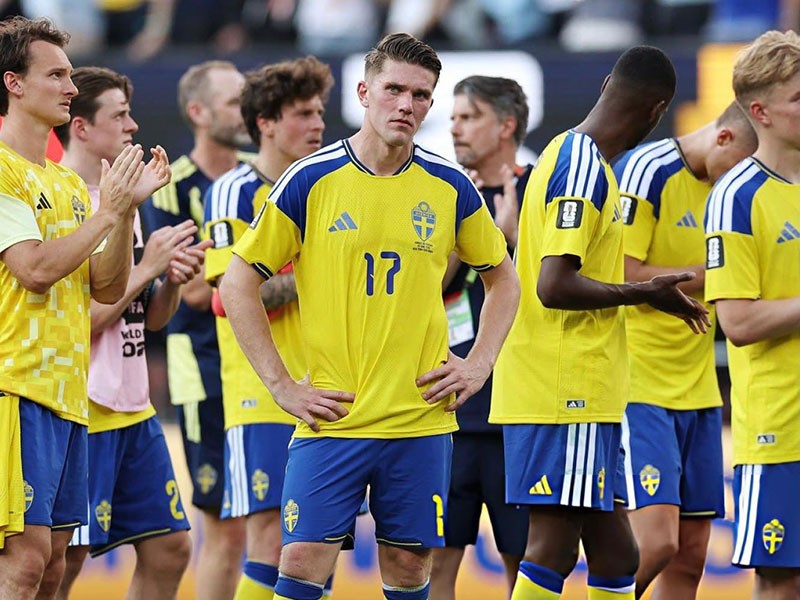
Graham Potter’s campaign finished in the same fashion it had begun, with a 3-0 defeat, although the circumstances surrounding those losses could hardly have been more different. His first setback came against Sunderland, where Eliezer Mayenda, Daniel Ballard, and Wilson Isidor were on the scoresheet, while his final match of the season saw France, inspired by Kylian Mbappe and Bradley Barcola, end Sweden’s World Cup journey.
The contrast between those occasions reflected Potter’s remarkable change in fortunes. After losing his position at West Ham, he accepted the challenge of leading Sweden and found a chance to rebuild his reputation. While his spell with the Hammers ultimately formed part of their relegation season, his own involvement ended when he was dismissed in September after only five Premier League fixtures. By comparison, he guided Sweden through four matches at the World Cup.
Throughout the tournament, Potter appeared more relaxed and assured than he had during his recent club appointments. Although Sweden were comprehensively beaten by France, there was some consolation in losing to a side that went on to lift the trophy. Potter admitted the gulf between the teams was enormous, saying Sweden would have needed to produce a flawless display, and even then victory might still have been beyond reach. He also described France as the strongest team he had faced.
Sweden exceed expectations on the world stage
Returning home after the tournament is proving difficult for several European national team managers, with Steve Clarke and Ronald Koeman departing their roles and uncertainty surrounding Julian Nagelsmann. Potter, however, is expected to remain in charge despite Sweden’s defensive struggles in the United States. The progress made over recent months has strengthened rather than weakened his standing.
Sweden entered the knockout match against France knowing they were outsiders. Potter pointed to the difference in experience and achievements between the two squads, acknowledging that France possessed exceptional quality. Outstanding performances from Michael Olise and Mbappe highlighted that gap, yet reaching this stage of the competition already represented an achievement that had seemed unlikely only months earlier.
Their qualification story made the run even more surprising. Sweden finished bottom of their qualifying section without a victory, collecting only two points. A play-off opportunity arrived through the Nations League system, and Potter’s team made the most of it. Viktor Gyokeres played a decisive role by scoring a hat-trick against Ukraine before netting an 88th-minute winner over Poland to secure their place at the World Cup.
A tournament filled with highs and harsh lessons
Sweden made an emphatic start by defeating Tunisia 5-1, their first World Cup match with more than four goals scored since 1938. Their next outing produced another unusual piece of history, although for less positive reasons, as they suffered a 5-1 defeat to the Netherlands. No team had previously recorded consecutive World Cup games ending with those identical scorelines.
A draw against Japan restored belief and proved enough to earn third place in the group, allowing Sweden to continue into the knockout rounds. That reward was a meeting with France, where their journey eventually came to an end. Potter refused to criticise his players afterward, insisting there was no shame in losing to such an outstanding opponent and describing the tournament as an important platform for future development.
The manager also highlighted the close relationship he has built with his squad, something that appeared absent during his periods at Chelsea and West Ham. His confidence was reflected in the decision to deploy a 4-4-2 formation against France. Potter has often shown a willingness to experiment, with mixed outcomes. While his tactical approach against the Netherlands did not succeed, moving captain Victor Lindelof into midfield against Japan proved to be a worthwhile adjustment.
Building for the future after valuable experience
Potter rejected suggestions that his tactical setup against France was the decisive factor, arguing that the opposition’s quality would have posed the same problems regardless of formation. Sweden’s greatest strengths lie in attack, where Alexander Isak, Gyokeres, and Anthony Elanga are among the squad’s leading players, and he chose to field all three together. Potter also acknowledged it would have been interesting to find a role for Dejan Kulusevski had he been available.
Defensively, however, Sweden lacked the depth of previous generations. They conceded 10 goals across four matches, illustrating both their weaknesses and the difficulty of the opponents they faced. Potter welcomed Victor Lindelof’s intention to continue representing the national team but accepted that finding greater defensive stability must become a priority.
There are still reasons for optimism. Potter pointed to the promise of younger players such as Yasin Ayari and Lucas Bergvall, describing the squad as one that is still developing. Recovering from the heavy defeat against the Netherlands to earn a draw with Japan demonstrated resilience, and he believes the experience gained throughout the tournament can provide a platform for future progress. After a season that began with disappointment in club football and ended with renewed belief on the international stage, Potter left the World Cup with a sense of satisfaction and hope for what comes next.