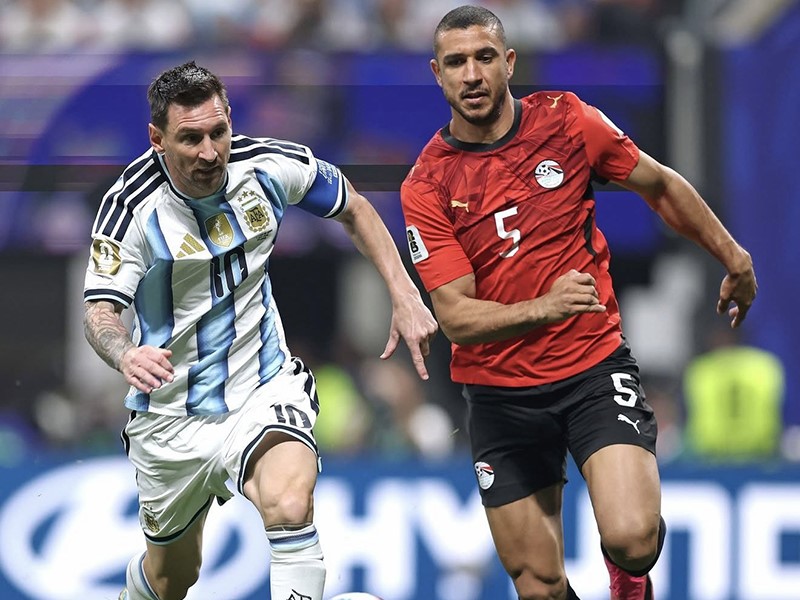
Egypt were within touching distance of the biggest World Cup victory in the nation’s history as they carried a 2-0 advantage over reigning champions Argentina with only 12 minutes of normal time remaining at Atlanta Stadium. A place in the quarter-finals, something the Pharaohs had never achieved before, appeared to be theirs before the contest suddenly turned.
Cristian Romero gave Argentina hope by reducing the deficit in the 79th minute, and the momentum shifted almost immediately. Lionel Messi then restored parity four minutes later, leaving Egypt stunned after appearing in complete control for much of the evening.
The dramatic turnaround was completed in the second minute of stoppage time when Enzo Fernandez headed home the decisive goal, sparking wild celebrations among Argentina supporters and ending Egypt’s remarkable run in heartbreaking fashion without the match needing extra time.
Controversial decisions fuel Egypt’s frustration
Egypt’s disappointment was intensified by a series of refereeing calls that left players and coaching staff furious. While leading 1-0, Mostafa Ziko thought he had doubled the advantage, but the goal was ruled out following a VAR review after Marwan Attia was judged to have committed a foul on Lisandro Martinez earlier in the attacking move.
The Pharaohs also believed they should have been awarded a penalty moments before Argentina’s winning goal after Mohamed Salah went down inside the box. Instead, play continued and the defending champions immediately launched the attack that resulted in Fernandez’s decisive header.
When the final whistle sounded, several Egyptian players collapsed onto the pitch in disbelief after seeing victory slip away. Emotions remained high long after the match had ended as frustration over the officiating continued to dominate the post-match reaction.
Hassan questions fairness after emotional exit
Egypt head coach Hossam Hassan launched a passionate criticism of the events surrounding the match, claiming his team had been treated unfairly.
According to Hassan, too many aspects of the contest damaged its credibility. He questioned whether outside influences had favoured the reigning world champions and even suggested there had been pressure to keep Argentina and Messi in the competition.
The Egypt manager also argued that his side had not received fair treatment during key moments of the match. He pointed to the overturned goal and the lack of a VAR review for the challenge involving Salah and insisted respect and fair play had been missing throughout the encounter.
Following Argentina’s winning goal, Hassan received a booking after crossing his arms in front of himself while protesting, a gesture recognised by FIFA as a signal to alert referees to racist incidents. He did not discuss that action after the game.
Forward Mostafa Ziko echoed his coach’s anger, describing the officiating as unfair and insisting Egypt had suffered injustice from the opening stages of the contest.
Eventful encounter packed with major moments
The quarter-final featured almost every type of dramatic incident. Egypt had opened the scoring through Yasser Ibrahim’s header in the 15th minute after arriving at the tournament with a poor World Cup record, having failed to win any of their previous seven matches before defeating New Zealand during the group stage in Vancouver on 22 June.
Goalkeeper Mostafa Shobeir produced one of the key moments of the match by saving a penalty from Messi, while the evening also included a disallowed goal, a red card shown to a member of Egypt’s backroom staff, and repeated VAR interventions.
On the eve of the tournament Hassan had spoken about improving Egypt’s image on the World Cup stage. His team appeared close to delivering exactly that before Argentina produced one of the competition’s most dramatic recoveries.
Refereeing debate and Salah’s future
The match reignited discussion surrounding officiating standards at the tournament. FIFA’s head of referees, Pierluigi Collina, had recently instructed officials to allow more physical contact in an effort to improve the speed of games, contributing to a lower foul count compared with the previous two World Cups.
The review that cancelled Ziko’s goal centred on Attia’s slight contact with Martinez, including a light shirt pull and minimal contact on his foot. While such an offence can be penalised, questions were raised about whether the intervention matched the approach used elsewhere during the competition, particularly as the challenge directly started the attacking sequence despite occurring 17 seconds before the finish.
Attention also focused on Salah’s appeal inside Argentina’s penalty area before the winning goal. Although the incident resembled the earlier foul involving Attia, the threshold for awarding a penalty is higher, meaning VAR did not intervene and Fernandez’s goal stood.
Salah leaves the tournament having scored once, with that goal arriving against New Zealand, and he did not record either a shot or a key pass in the defeat to Argentina. He will be 38 by the time the 2030 World Cup is staged in Morocco, Portugal, and Spain, leaving uncertainty over whether he will appear at another finals.
Egypt’s elimination also reduced Africa’s representation in the tournament to one remaining nation. Morocco, who became the first African side to reach a World Cup semi-final four years earlier, will face France in the quarter-finals at Boston Stadium on Thursday.